
Note: this is part of my objective and carefully-researched opening take on the 2024 UK General Election contest.
Labour have been through the grinder since their last time in power. While the Conservatives have removed the mask and revealed the unbending malevolence at their heart, Labour have been locked in an internal battle over what their identity even is. It has been quite the ride.
On the surface, where they started seems to have many parallels with where the Conservatives now find themselves. They were at the tail end of more than a decade in power, unpopular, reeling from a global crisis, under the shadow of a war in Europe, and led by someone who really wasn’t the right person to steer the ship through such turbulent waters.
But the similarities stop there.
Throughout their time in power, New Labour had two prime ministers, the second of which stepped down as soon as he lost an election. The Conservatives have now had five, over a similar span. Only three of those have actually won an election. Two of those that did had to go to other parties for support, unable to form a government on their own majority.
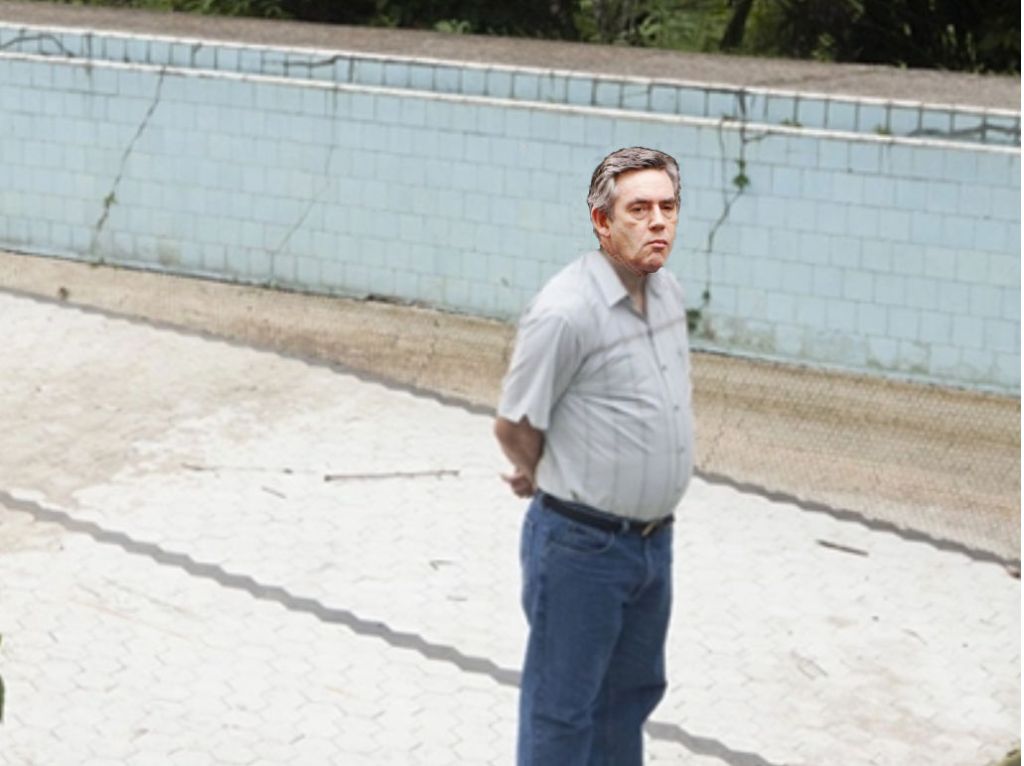
Someone just needed some time to cool off and think about their actions.
In that time, Labour have been through just three leaders, each fighting for the heart of the party from different directions. This hasn’t always been great, if I’m honest; the Corbyn years became increasingly painful, massively exacerbated by his total failure to mount a strong (or even flimsy) anti-Brexit argument. But it has certainly been thorough. And now, after 14 years out of power, Starmer seems to have finally found something that can work.
But what is it?
The Plan Mission
It’d be a lie to pretend that Labour have done a stellar job of making their position clear. There’s a number of politically savvy reasons as to why they might have wanted to avoid doing that, but it has also left them open to valid criticism about who they actually are.
In part, I think that’s because they were still trying to work it out, trapped between COVID and an unknown-but-imminent general election. Starmer took the leadership at the start of a global pandemic, which threw everything up in the air. He spent the first few years planning an unfortunately necessary purge of some unsavory tankies and whackos, who’d co-opted the party under Corbyn.
This wasn’t only necessary so the party could actually move forward into an election with some degree of unity, but also pretty much all he could spend that time doing. You can’t well plan a detailed policy statement when you’ve got no idea what things are going to look like when the smoke clears.
However, that was then. Over the last year or so, the smoke has cleared and it has become increasingly clear that Labour does have a vision for its time in power. The details are still a bit thin, but its five “national missions” are remarkably similar to the platform put forward nearly 30 years ago by a certain T. Blair. Yes; the new Labour platform is, in fact, the New Labour platform.
And that’s good. It’s generally agreed by anyone who doesn’t froth at the eyes and say things like “What this country needs is <insane statement of nostalgia for the blitz>” that the first few years following the New Labour landslide in 1997 were enormously successful. It’s the kind of record that any party would love to be in a position to emulate.
They were also responding to similar conditions as we now face. We’d had nearly 20 years of Tory rule, a bloody gigantic recession, eastern Europe was engulfed in war, and the country was a mess. If it worked then, why wouldn’t you take that model, tweak it, and apply it again? Not only has it been tried and tested, but it fits perfectly within an evocative and compelling narrative: once again, after a long time with the Conservatives shitting in everyone’s kettles, Labour have a plan to get things back on track.
I think this is a large part of why the Conservatives are so desperate to paint Labour as having no plan. It’s because they know it isn’t true. And they know they themselves have no plan. They’ve become wholly reactive, possibly due to an obsession with constant – and terrible – polling figures, and the party being so divided they can’t reliably pass legislation without a massive public hoo-ha.
The phrase “Tory psychodrama” was used a lot during the post-Brexit clown convention but, truthfully, the entire last 10 years has been under a government trapped in exactly that. Whatever plans may have at some point existed have all been inward-facing, little more than self-indulgent navel-gazing by warring factions whose only properly shared value is a sense of entitlement as The Natural Party of Government.
The Challenges
The reason there is some credibility in claiming that Labour don’t have a plan sits around two main points; brute facts that dictate what is possible, and That Which Must Not Be Named.
On the first point, it’s quite simple: there are some immovable constraints on what is possible in the current climate. Economic plans that don’t at least reference reality are easily pulled apart. Said reality is frantically signalling that the economy is buggered, has been buggered for a long time, and needs carefully unbuggering before anyone does anything drastic.

Reality, trying to catch the attention of a responsible adult.
What this means in practice is sweeping economic reform is off the table for at least the short-term and probably the mid-term too. Undoing the damage of the last attempt at sweeping economic reform – thanks, Liz – in itself is going to take some time. Labour’s message about stability and growth is definitely the right one, as we must stop reeling from fuck-up to fuck-up like some abstract monetary drunk. It’s bad for people, it’s bad for businesses, and it’s bad for government budget-setting.
There’s an offshoot to this, too. Sunak benefits from anything that paints Labour as not really different, because it’ll demotivate the Labour vote. If Labour had been loudly announcing good policies for the past 12 months, the Tories would simply have stolen them and then claimed everyone might as well stick with the devil they know. It’s not like they don’t have form on this: just look at energy industry windfall taxes, which went from “never ever” to “obviously we’ve always thought these were a great idea” the moment it became politically expedient.
The second point is much trickier. The Tories would be paralysed by a days-long collective orgasm if Labour dared question whether maybe Brexit or the way we handled Brexit weren’t great. After they’d recovered and wiped themselves down with unused PPE, they’d turn this into yet another election of They’re Trying To Take Brexit From You and stand a very good chance of winning on that point alone.
This is a big problem for prospective Labour flagship policies, because they don’t want to float anything that leads down the line of questioning that starts with “how would you fund this?” and ends at “so you’d join the European Economic Area?” Yet, in practice, sorting out some of the damage caused by the Conservatives’ bibs-and-blankies vandalism is a very viable way to improve the economy. Just not one they dare mention until after the polls close.
The Office for Budget Responsibility’s latest figures suggest we’ve knocked 15% off our import and export numbers because of Brexit. Not just that we did it, but how we did it. As of December 2023, annual EU-based exports were worth ~£357bn and imports ~£465bn. Improving these figures by 15% would mean adding billions to the public finances, which could be used for anything from investing in further economic stimulus or improving services such as the NHS and our schools.
But they can’t talk about that at the moment. Don’t be surprised if that changes after election day, though.

What Next?
Well, assuming the polls aren’t so far off that everyone gives up on polling entirely, Labour will form the next government. They’ll probably want to grab hold of a few key issues early, to be seen to be taking BOLD ACTION. I’d be very surprised if this didn’t include a bill addressing immigration in a way that isn’t “we took a bunch of acid and listened to Oswald Mosley speeches on loop for 7 hours”, as well as something on public sector investment and workers rights. Think “more funding for teachers and nurses” and something cracking down on most abusive elements of the gig economy.
For longer term projects, I’d be surprised if there wasn’t something on anti-social behaviour measures, probably linked to reform of the judicial/probation system, and nationalisation of a few failing industries. This last would include creation of the British Green Energy business, which is a genuinely excellent proposal but that will take time to actually do anything.
There’ll probably be a pretty major push on housing, but I wouldn’t be surprised if this isn’t immediate. It’d be a very strong area to talk about, hold lots of consultations on, and then actually launch in the second half of their first term. Doing this would put them in really good shape for another win, so while I’d love to see something really big on this on day one, I expect we’ll have to wait a bit.
If they can get the public coffers in a healthier state, tinkering with the welfare and tax systems seem like low-hanging fruit. To get there, they may well have to address the Brexit issue in the form of a more grown-up relationship with the EU. Defense spending will rise and Trident won’t go anywhere. Joining with an EU collective defense program might be the wedge to get us back into the common market and/or customs union; Ukraine is a big problem and this ties defense spending to improving our standing with the EU. Plus, if Trump wins in November, being a member of NATO will have just become practically worthless.
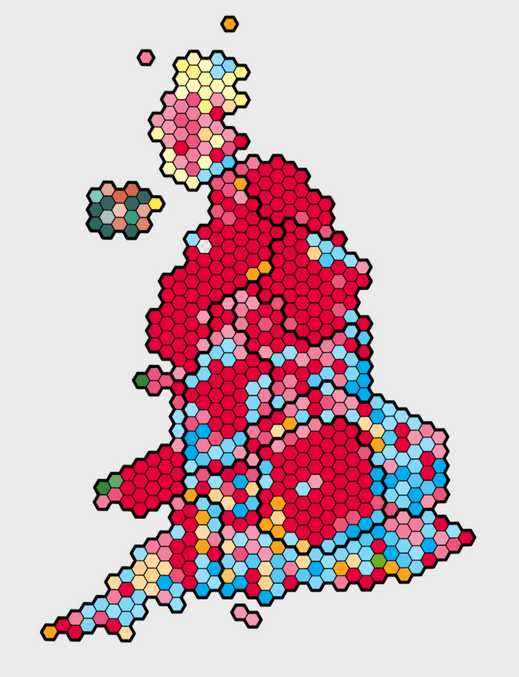
Beautiful, but still too much blue. Courtesy of electionmaps.uk
I think the core message here is this:
Labour will focus on providing some much-needed consistency, with a focus on actually passing a meaningful legislative agenda based on a forward-looking fiscal policy that recognises the constraints of economic reality. Depending on how large a majority they can win – and so-called “macro factors,” such as the global economic and security landscape – this could result in a very productive few years, delivering real change. Not on the scale people will be hoping for, but in the direction that’s needed and in a way that is sustainable. The moment they’re in office, all eyes will be on how they can ensure they’re not a one-term government.
Even if, like me, you don’t love Labour, I think there’s good reason to expect them to make some swift and significant improvements. Not just because it’d be almost impossible to not be better than the current shit-shower-on-a-windy-day we’ve been living under for the past 14 years, either. Even if you’re cynical enough to think they’ll not do the right thing out of principle, they’ll need to do it anyway, as before we know it, it’ll be 2029 and the Tories will be forming a coalition with the United Kingdom Reform And Pogrom party (UKRAP).
 Inaccurate Conception
One thought on “2024 Election Preview – Labour”